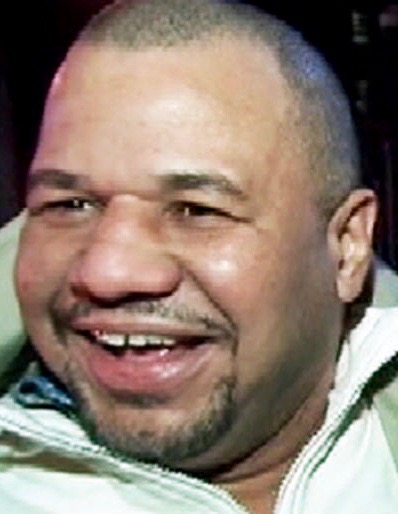
 Carlos Perez
On January 17, 1995, 38-year-old Denise Raymond, a Federal Express executive, was bound, gagged and blindfolded in her Bronx apartment and shot twice in the head. Her body was found the following morning.
At 4:30 a.m. on January 19, less than 24 hours after Raymond was found, 43-year-old Baithe Diop, a driver for New Harlem Car Service, was fatally shot on a Bronx street about a block from Raymond’s apartment in what police said appeared to be a robbery.
A woman named Catherine Gomez told police investigating the Raymond homicide that she heard a group of young men talking about the murder while she was in a Bronx park. Gomez said that on January 17, she heard the men talking about “robbing a taxi and a girl.”
Police then found a woman named Miriam Tavares, a drug addict who regularly hung out in the park. Tavares, who spoke only Spanish, told police that she also had heard young men discussing the murder.
Ultimately, based on statements made by Tavares and Gomez, police charged Devon Ayers, 18, Michael Cosme, 19, Carlos Perez, 25, and Israel Vasquez, 17, with murdering Raymond at the behest of Raymond’s former boyfriend, Charles McKinnon. Police said Raymond was killed because she rebuffed McKinnon’s efforts to resume their relationship and threatened to tell police that McKinnon was dealing drugs. McKinnon was charged with conspiring to have the four kill Raymond. Police said that while questioning Tavares, she told them that she had heard Diop being shot and saw a number of people flee from Diop’s car after the shots were fired. She later identified them as Ayers, Cosme, Perez, Vasquez, 18-year-old Eric Glisson, and 27-year-old Cathy Watkins.
During their investigation, police learned that Diop had been dispatched to 30 W. 141st Street, where he picked up the people who robbed and killed him. Watkins was a resident of that building and police asked her to come into the police station. While there, she was asked to answer a telephone and pretend that she was ordering a car to pick her up. Police had also brought in the dispatcher who took the call that sent Diop to the 141st Street address, and she listened to Watkins’ voice on the phone from another part of the station. After Watkins spoke, the dispatcher said she immediately recognized Watkins as the caller.
Watkins was then charged with Diop’s murder, as were Ayers, Cosme, Perez, Vasquez and Glisson. Watkins did not know any of her co-defendants.
Ayers, Cosme, Perez and Vasquez went on trial for the murders of Raymond and Diop in March 1997. A key prosecution witness in the Raymond case was a friend of Raymond’s, Kim Alexander, who said that on the evening before Raymond was murdered, McKinnon got into the elevator on an upper floor where Raymond and Alexander worked. Alexander said she rode down the elevator with Raymond and McKinnon and that they were arguing on the way down, and that the argument continued as McKinnon followed Raymond out of the building.
The prosecution relied on that testimony at the trial to argue that McKinnon then alerted Ayers and his co-defendants that Raymond was leaving so they would be ready to ambush her when she came home.
On March 5, 1997, Ayers, Cosme and Perez were convicted of both murders and each was sentenced to 25 years to life in prison on each case, to be served consecutively. Vasquez was acquitted of the Diop murder, but convicted of murdering Raymond. However, an appeals court later reversed that conviction, ruling there was insufficient evidence of guilt.
In 1998, McKinnon was tried separately for the Raymond murder. As the trial neared its end, the prosecution disclosed for the first time that a security video from Raymond’s office building directly contradicted Alexander’s testimony because it showed Raymond and Alexander walking out together without McKinnon. The trial judge offered to declare a mistrial, but McKinnon chose to go forward with the trial and was acquitted. Thereafter, the record of the case was sealed.
In September 1997, Glisson and Watkins went on trial separately for the Diop murder and were convicted based on the testimony of the car service dispatcher, Gomez, and Tavares—although Tavares gave conflicting testimony that included seeing the shooting from a window that was apparently located in a place where it was impossible to view the crime. Tavares identified Glisson as the shooter. Glisson and Watkins were convicted of second-degree murder. Each was sentenced to 25 years to life in prison.
In 2003, federal authorities were investigating a Bronx narcotics gang called Sex Money and Murder, known as SMM. An investigator, John O’Malley, debriefed Jose Rodriguez and Gilbert Vega, both former members of the gang who were cooperating in the investigation. Both independently described being involved in the robbery of a livery driver in the Bronx in late 1994 or early 1995. They said that they had each shot the driver and fled and neither knew whether the driver had survived or died.
O’Malley, a former homicide detective in the Bronx, attempted to corroborate the statements, but was unable to track down the case without the name of the victim or any knowledge of whether it was a homicide at all.
Vega and Rodriguez ultimately pled guilty to robbery charges based on their own admissions.
In May 2012, federal prosecutors in New York received a letter from Glisson, who was serving his sentence at Sing Sing prison. Glisson wrote that he had heard that Diop’s killers were members of the SMM gang. The letter was addressed to a prosecutor who no longer was in the U.S. Attorney’s Office and by sheer luck was handed off to O’Malley, who instantly realized that the description of the crime in Glisson’s letter matched what Rodriguez and Vega told him nine years earlier.
In June 2012, the Bronx County District Attorney’s Office was provided a copy of Glisson’s letter and after meeting with O’Malley, initiated a re-investigation of the murders of Raymond and Diop. By then, Tavares was dead, as was the trial prosecutor. In addition, Gomez had recanted her testimony as untrue. Investigators retrieved the call records of Diop’s cell phone, which was stolen after he was killed, and the records showed that after Diop was killed, the phone was used to place calls to associates of Vega and Rodriguez.
After interviewing Vega and Rodriguez, the Bronx prosecutors were convinced of the innocence of Ayers, Cosme, Glisson, Perez, and Watkins, and agreed that their convictions for the Diop murder should be vacated.
The prosecution notified Centurion Ministries, a Princeton, New Jersey-based organization that investigates wrongful convictions, which then filed a motion on behalf of Watkins to dismiss the case. Peter Cross, a New York lawyer who began representing Glisson in 2006 at the behest of a nun at Sing Sing, Sister Joanna Chan who had come to believe Glisson was innocent, also filed a motion to dismiss the charges.
Glisson and Watkins were released from prison on bond in October 2012. On December 13, 2012, the charges against Glisson and Watkins were dismissed.
The charges against Ayers, Cosme and Perez for the Diop murder were dismissed on December 12, 2012, but they remained in prison for the Raymond murder.
Meanwhile, Vasquez had filed a civil rights lawsuit against the City of New York and the New York City Police Department in 2010. As the case progressed, lawyers for the city and police department turned over the security video from the McKinnon prosecution, which was then shown for the first time to lawyers for Ayers, Cosme and Perez. They then filed a motion to set aside their convictions arguing that the security video should have been disclosed to their attorneys at their trial. The motion also contended that because they had been tried and convicted simultaneously for the Raymond murder and the Diop murder, the jury in the Raymond case may have been influenced by the charges and evidence that they killed Diop, which had been revealed to be false.
On January 23, 2013, the Bronx County District Attorney’s Office agreed that the motion should be granted. The convictions were vacated and Ayers, Cosme and Perez were released from prison. On September 20, 2013, the prosecution dismissed the charges.
Federal civil rights lawsuits were filed in 2014 on behalf of Ayers, Glisson, Perez, Watkins and Cosme. The lawsuits were settled for $8 million each in April 2016. Ayers, Watkins, Perez and Glisson subsequently filed claims for compensation in the New York Court of Claims. Each received $3,890,000 in settlements.
– Maurice Possley
|