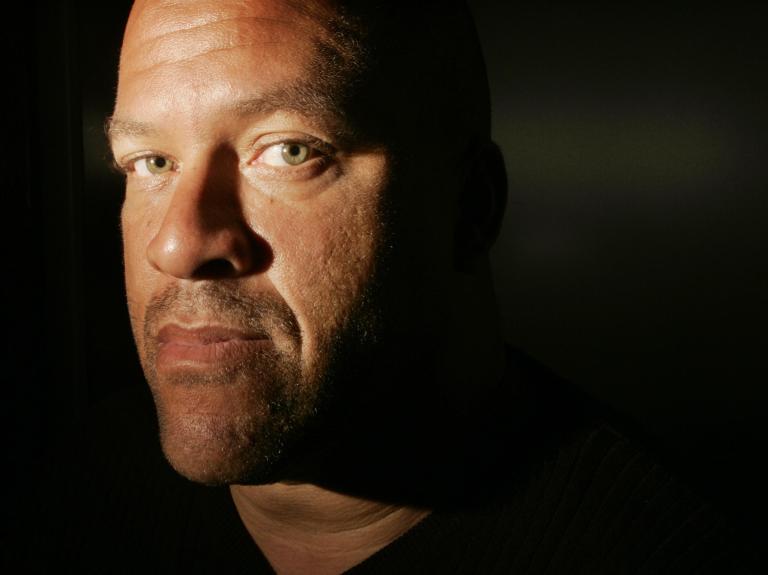
 Quedellis Ricardo Walker (Photo by San Jose Mercury News) On January 10, 1991, the body of 34-year-old Lisa Hopewell was discovered in the guest bedroom of her apartment in Cupertino, California. She had been bound, suffocated with duct tape and stabbed.
Santa Clara County Sheriff’s officers collected 31 latent fingerprints, cigarette butts and the tip of a glove. Latent fingerprints on the duct tape were linked to a drug dealer named Rahsson Bowers, who was arrested on March 7, 1991.
Bowers denied involvement in the murder until police told him his fingerprints were on the duct tape. Bowers then implicated himself and 34-year-old Quedellis Ricardo Walker, who had had a previous romantic relationship with Hopewell. Bowers said he accompanied Walker and Hopewell to Hopewell’s residence where two white men jumped out of a closet and helped Walker kill Hopewell. Bowers claimed he was forced to take part in the crime.
Bowers was given a polygraph examination and during the exam, he changed his story. He dropped the claim about the two white men and said he and Walker killed Hopewell. Walker was interviewed and denied being involved in the murder. He said he was at a motel with Jacqui Miller on the night of the crime. When Miller was questioned and denied she was with Walker, he was arrested. Bowers and Walker were charged with murder.
Bowers and Walker went on trial together in Santa Clara County Superior Court in August 1991. While the prosecution was still presenting its evidence, Bowers agreed to plead guilty to second-degree murder and testify against Walker.
Bowers then testified that Walker and Hopewell had argued and Walker kicked her and then grabbed the duct tape. Bowers said Walker demanded he help kill Hopewell and that he feared Walker would kill him if he didn’t take part.
Sarah Dunbar, an acquaintance of Walker’s, testified that he was a violent person and that he had threatened her with a knife and a gun. She said she had purchased him a pair of gloves that were similar to the portion of the glove found at the scene of the murder.
Miller testified that she was with Walker at the hotel and said she had lied to the detectives initially because she was married and she thought the detectives had been sent by her husband. Motel records confirmed that Miller and another person occupied a motel room for a three-day period that included the day of the murder.
On December 10, 1991, a jury convicted Walker of first-degree murder and he was sentenced to 26 years to life in prison. Bowers was sentenced to 15 years in prison.
A new defense attorney for Walker later found five witnesses who testified that Walker was not at the murder scene. Dunbar admitted that she had lied to implicate Walker because she was promised leniency on a drug charge—a deal that the prosecution failed to disclose to Walker’s lawyer prior to trial. Moreover, several witnesses were found who identified another man as Bowers’s accomplice in the murder, and DNA testing on cigarette butts at the scene were linked to the other man, Mark Anthony Swanson. One witness said Hopewell was a heavy drug user who owed Bowers a large drug debt.
In 2003, the Santa Clara County District Attorney’s office, after conducting its own re-investigation, asked the Santa Clara County Superior Court to grant a state petition for habeas corpus that was filed on Walker’s behalf. Swanson later pled guilty to voluntary manslaughter and was sentenced to 15 years in prison.
Walker was awarded $409,500 in state compensation for his wrongful imprisonment. He also received $2.75 million to settle a federal lawsuit against Santa Clara County.
Walker died in November 2020, after spending years working with other exonerees and parolees.
– Maurice Possley
|